By Mark P. Mills & Julio M. Ottino
This summer marked the 70th anniversary of the meeting when the term “artificial intelligence” was launched. But it’s been less than four years since the launch of generally useful AI when ChatGPT burst on the scene and triggered first, a tsunami of news stories and commentaries amazed by AI’s parlor tricks and then, surprisingly quickly, myriad narratives about impending AI harms, even catastrophes.
Having witnessed one of history’s shortest journeys from awe to shock, Silicon Valley now has a problem. The problem can be traced to the naming act itself, calling one of the most consequential technological advances in history “artificial intelligence” has not only animated anxieties but also inspired hyperbole including the idea of an inevitable superintelligence.
The idea that computing machines might appear intelligent originates in the 1840s with mathematician Ada Lovelace. She assisted Charles Babbage, builder of the world’s first (mechanical) computer. When electronic computers arrived, a century later, MIT mathematician Norbert Wiener coined the phrase and founded the field of cybernetics to describe on how biological and (electronic) machines learn to control behavior using feedback loops—the essential feature that differentiates AI software.
That the “learning” framing was revolutionary was obvious to the great mathematical and computing minds of that era. In 1950 Alan Turing—father of the imitation game now called the Turing Test—published a paper titled “Can a machine think?” A few years later, Dartmouth math professor John McCarthy chose a different term, artificial intelligence, in order to promote a Summer 1956 workshop to explore how a machine might “simulate” human intelligence. McCarthy could hardly have foreseen the anxieties that the term AI would animate compared to cybernetics.
Conflating the two words—artificial and intelligence—has trapped debates around questions that are interesting but hardly practical. Is it truly intelligent? Can it replace human intelligence? Will it become conscious? Will it want to hurt us? Invoking superintelligence accelerates anxieties. The name framed the debate before it began, leading to political backlash from bans on data centers to proposals for an AI moratorium. Meanwhile, questions that matter ae given short shrift: How reliable are these systems, and how can reliability be reliably measured? Should and can their use be governed differently than other technologies? Who bears costs? Who captures benefits?
Meanwhile, regardless of the urgency to address many real-world challenges to establish appropriate guardrails for a radically new technology, too many of the leading AI practitioners and innovators are instead throwing around, and hyping, even more fraught terms such as “artificial general intelligence” and “superintelligence” in manifestos and visions of AI’s future.
It’s likely too late to unwind the term AI as a profoundly misleading term-of-art, but it’s useful to understand why the name is a problem. Names are not neutral. They are among the first tools by which understanding is constructed. In effect, names are models or compressed theories that create expectations.
The term AI not only compresses an entire range of technological ecosystems into two words but also misleads. We don’t call a car an artificial horse, nor an airplane an artificial bird. The differences from nature are readily discerned.
Consider another computer-related term, “the cloud.” That name evokes something weightless, benign, and far away. But what it describes is a network of thousands of increasingly enormous warehouse-scale data centers consuming power and water. For two decades that word contributed to the invisibility of the physical reality. AI’s naming problem runs the other way. While “cloud” conceals too much, “artificial intelligence” promises too much and is too ambitious.
Too ambitious because it invokes the most mysterious human capability: intelligence. And too broad because AI tools encompass so many distinct ecosystems: language models, prediction systems, vision systems, scientific discovery tools, autonomous virtual agents, physical robotics, optimization algorithms, and cybersecurity.
Investors and professional communities though, use metrics not just words in order to consider appropriate actions. Investors evaluate expected value: Even a tiny chance AI could transform any of medicine, science, education, manufacturing, or pharmaceuticals justifies massive investments. Meanwhile, communities react to expected utility: Whether jobs disappear, infrastructure costs and disruptions land on them, or promised benefits ever arrive, especially locally. A name that inflates both risks and payoffs exaggerates the shock and the awe.
If, instead, we spoke about “expert assistants,” “scientific accelerators,” “autonomous decision advice,” or “natural language knowledge infrastructure,” or used well-established specific terms such as “self-driving car,” or even “super-apps,” people might evaluate such tools differently because each implies different benefits, risks, and governance questions.
The taxonomy of where AI venture investments are taking place, and what organizations are in fact doing, already makes clear that such hyper-specialization is the real future. Investors may understand the distinctions, but reality is being trampled by hysteria, further amplified by the hypertrophied term, superintelligence.
Before we decide how to regulate AI, we should first ask whether misnaming has led to misunderstanding what’s coming. We cannot govern what we cannot conceptualize, and we cannot conceptualize what we cannot name. It may be too late to break the world’s addiction to the name, AI. But the first step to recovery is to admit the addiction.
This article originally appeared in RealClear Science on September 3, 2026.
Mark P. Mills is executive director of the National Center for Energy Analytics, a faculty fellow at Northwestern University’s engineering school, and author of “The Cloud Revolution.”
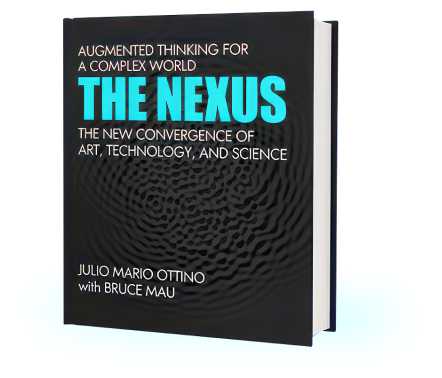
Julio M. Ottino is a professor at and former dean of the McCormick school of engineering at Northwestern University, a member of the National Academy of Sciences, and author of “The Nexus.”